Leaf sweeping on a Kansas City commercial property works best when everyone responsible for the exterior follows the same plan. The landscaper may handle planted areas, a porter may collect litter near storefronts, and a sweeping contractor may clean the parking lot. Without coordination, each can finish a task while leaving the next crew a new pile to move.
The solution starts with responsibility rather than equipment. Decide where leaves will be collected, who will remove them, and which paved areas need attention first. Leaf sweeping can then support a cleaner, more orderly property instead of becoming a repeated effort to shift material between contract boundaries.
Connect leaf sweeping with the landscaping schedule
Before requesting service, ask when the landscaped islands, sidewalk edges, and building perimeter will be addressed. Those areas can feed leaves back onto the pavement. A final parking-lot pass should be coordinated with that work, not scheduled without knowing whether more material will arrive immediately afterward.
Identify the difference between leaves that can remain beneficially in an appropriate planted area and leaves covering a traveled surface. Do not strip every planting bed simply to make the pavement contract easier. The landscape manager should make the planting decisions, while the pavement scope focuses on access, collection, and the areas people use.
Give each area a named owner
Leaf sweeping requests often become unclear at the edges. Is the strip beside the loading dock part of the lot? Who handles leaves behind a dumpster enclosure? Does the contract include stairs, narrow passages, and the front sidewalk? Answering those questions prevents assumptions from turning into missed work.
Create a short responsibility list for the property manager, landscape provider, sweeping company, and tenant contacts. For a center with multiple businesses, include leased outdoor areas and delivery spaces. Avoid assigning a contractor work that requires different equipment or authority without first agreeing to the scope and any separate charge.
All Care Services describes parking lot and sidewalk sweeping among its Kansas City-area services. Use the quote conversation to establish how the pavement work will connect with the rest of the site’s maintenance.
Prioritize where leaves interrupt operations
Begin with a walk from the customer’s point of arrival to the entrance. Notice curb ramps, crosswalk approaches, cart areas, and the spaces where people step out of vehicles. Then review service drives and loading zones. A property can look clean from the street while its working edges remain covered.
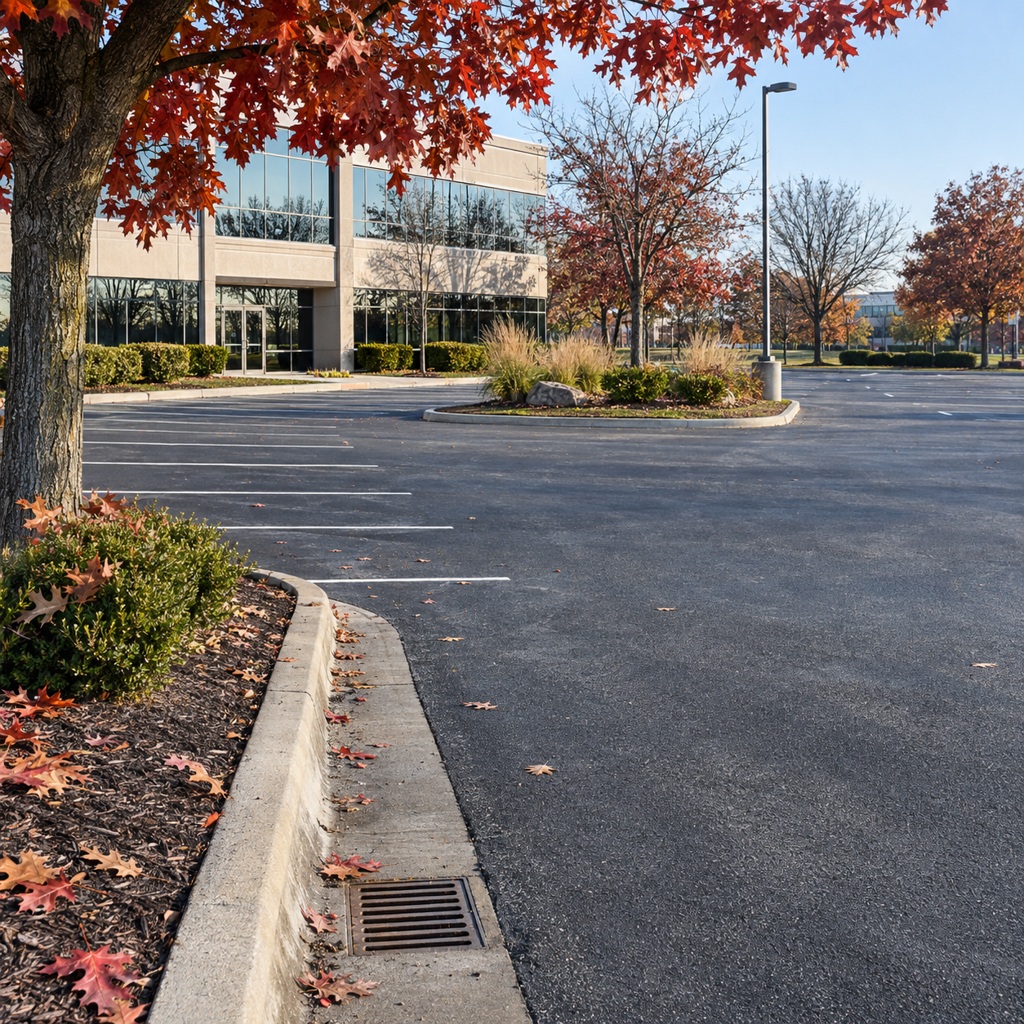
Leaf sweeping should also address accessible surface-drain approaches in the agreed area. Leaves gathered against a grate can obstruct incoming water. Removing visible debris does not prove the underground system is clear, so recurring ponding still deserves a separate inspection. Record those observations instead of simply requesting another cleaning pass.
Consider a shopping center with a landscaped perimeter and a shared rear service lane. Its work order might call for coordinated landscape cleanup, litter collection in the service lane, and a final sweep of accessible parking rows. The example shows how to define a sequence without assuming every commercial lot needs the same frequency.
Separate collection from disposal assumptions
A leaf sweeping visit should have a clear destination for the material removed. A contractor’s collected load may contain litter, sediment, and other debris as well as leaves. That mixture should not automatically be treated as clean yard waste suitable for every composting or drop-off program.
Kansas City’s leaf and brush information describes accepted yard-waste materials. Commercial operators should verify eligibility, material restrictions, and current arrangements directly rather than assume that residential collection rules cover a mixed sweeping load. Across the metropolitan area, the applicable program may differ by jurisdiction.
Ask whether loading, transport, and disposal are included in the quote. If branches or bulky refuse are present, describe them ahead of time. Those materials may require separate collection before leaf sweeping can reach the pavement effectively.
Plan access around real business activity
The quietest hour on paper is not always the quietest hour at the property. Early deliveries, restaurant staff, overnight vehicles, and waste collection can all overlap with exterior maintenance. Share that information before booking leaf sweeping, and identify who can resolve an unexpected obstruction.
Where possible, reserve selected rows rather than requesting that every vehicle move at once. Give tenants a simple notice naming the date, affected spaces, alternate parking, and expected communication if weather changes the visit. Preserve required routes and accessible parking arrangements through an appropriate site plan.
If areas remain blocked, ask the contractor to document them. That lets the manager distinguish an access problem from an incomplete work order and decide whether a return visit is necessary. Accurate records are more useful than a vague assurance that the entire lot was covered.
Check results using the original scope
After leaf sweeping, compare the result with the marked areas on the site plan. Look at the same drain approaches, sidewalk edges, and rear corners identified before service. Photos taken from repeatable locations make it easier to communicate with a remote owner or another member of the management team.
Evaluate the interval by observing what returns. A few newly fallen leaves are different from a deep accumulation that was never removed. Adjust future leaf sweeping based on actual tree cover and use of the property. Avoid promising that one visit will keep an actively shedding site clear through the rest of the season.
Put the property on one coordinated plan
All Care Services, LLC provides exterior maintenance for the Kansas City metropolitan area. A useful request explains the property type, the areas collecting leaves fastest, and the providers already working there. That gives the team the context needed to discuss a practical scope.
To arrange leaf sweeping and connected pavement care, contact All Care Services. Ask how parking-lot work, pedestrian edges, and collected debris will be handled. A clear division of responsibility helps each visit contribute to the same finished property.